
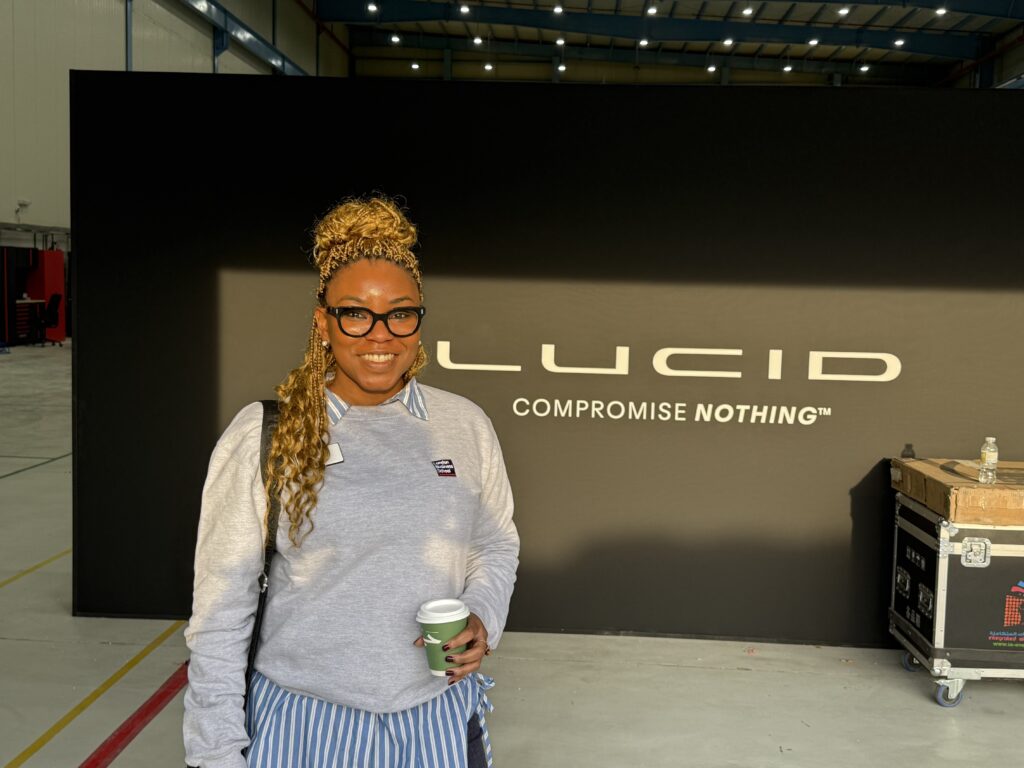
Jamechia “JD” Hoyle, EMBAG2026, participated in the Riyadh Global Experience course, “Unlocking Innovation: Saudi Arabia’s Economic Transformation,” held in December 2025. The Global Experience served as a live capstone, applying classroom concepts to real-world practice through Vision 2030. Discover JD’s experiences below.
Some experiences are memorable because of where you go. This one was memorable because of what it represented. Riyadh was the culminating global experience of my EMBA-Global journey, and it felt like the right final classroom: not a case study frozen in time, but an economy in motion. Our course, Unlocking innovation: Saudi Arabia’s Economic Transformation, came alive through a week designed like an executive immersion, fast-moving, high-access, and grounded in rigorous business school framing.
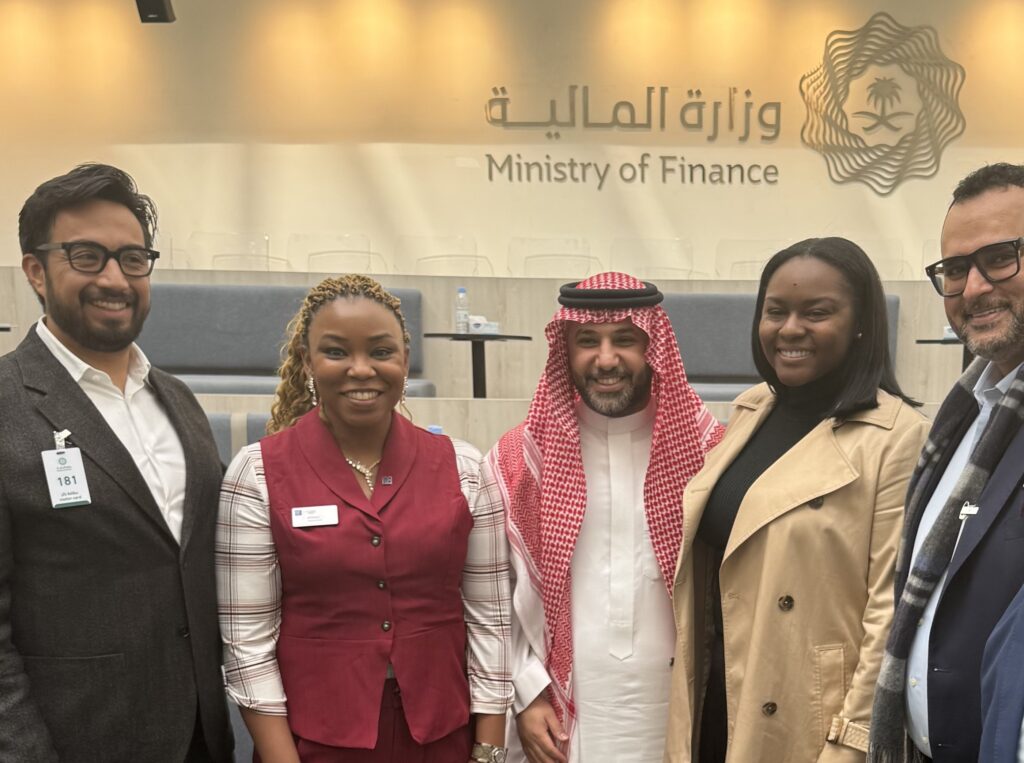
What made the experience especially distinctive was the community around it. This was not a typical cohort-only module. The group included participants from across the business school ecosystem, including alumni, which elevated the dialogue and the level of executive perspective in the room. We were also hosted by dignitaries and alumni throughout the week, hospitality that didn’t feel ceremonial, but substantive, personal and deeply connected to the country’s broader ambition.
One moment captures the tone of the experience for me: sitting in a room where the questions weren’t “what is Vision 2030?” but “what has to be true for this to scale?”. The conversation moved quickly, from incentives and institutional design, to capital formation and talent pipelines, because the people in the room (on both sides of the table) were thinking like operators. It didn’t feel like we were observing transformation from the outside. It felt like we were being invited to understand the logic of how it’s being built.
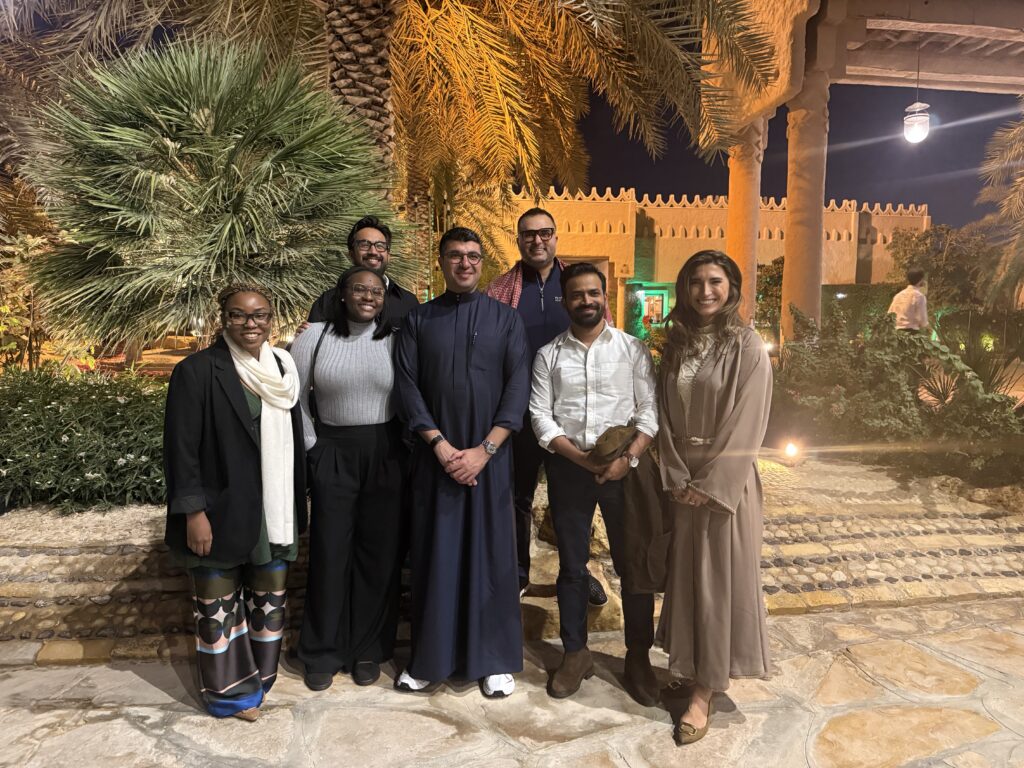
Saudi Arabia’s shift is often summarized as “Vision 2030,” but on the ground, the real story is the operating model behind it: a coordinated push across capital, regulation, infrastructure and talent to accelerate diversification beyond oil. Again and again, we saw how national priorities are translated into investable platforms and sector bets, then reinforced through policy reform, market-building and measurable execution.
Another theme that stayed with me was speed. In multiple settings, we heard a clear focus on removing friction: simplifying processes, improving predictability and using metrics to prove progress. From a business lens, it felt like product thinking at national scale, define the pain points, redesign the journey, reduce bottlenecks and tighten the feedback loop so reforms compound.
As a finale to EMBA-Global, Riyadh delivered exactly what I hoped for: intellectual rigor, real-world complexity, and the kind of perspective you only gain when strategy isn’t theoretical. The presence of alumni and the generosity of our hosts added a layer of meaning, reminding me that business school is not only coursework. It’s a community and a network that challenges you to think bigger, ask better questions and lead with substance.
I left Saudi Arabia with a sharper understanding of how economies reposition themselves, a deeper appreciation for aligned execution, and genuine gratitude for an experience that felt worthy of the finish line.
For more information on the EMBA-Global programme and Global Experiences, please visit our website.